

🧠 Humans of Cyber | Adam Pennington
MITRE built ATT&CK in 2013, public 2015, to model attacker TTPs; teams use it for hunting and detections; updated twice yearly.

System logs and alerts are useful, but without a shared vocabulary, security teams end up describing the same attacker behavior in different ways. MITRE ATT&CK solved that problem by turning real-world adversary tradecraft into a structured model that teams can use for threat hunting, detection engineering, red teaming, and security reporting. In 2026, it is widely treated as the default map for understanding how intrusions actually unfold across endpoints, cloud services, identity systems, and industrial environments.
ATT&CK is not a product and it is not a SOC in a box. It is a knowledge base. Its value comes from the way it helps teams translate incidents and intelligence into repeatable defensive work.
How ATT&CK got here
MITRE began building the ATT&CK adversary behavior model in 2013 and released it publicly in 2015, initially focused on common Windows intrusion behaviors. Over time, the framework expanded into multiple domains: Enterprise, Mobile, and ICS, with cloud techniques becoming part of Enterprise as cloud operations became inseparable from enterprise security.
ATT&CK is updated on a steady cadence, typically twice per year. Each release adds new techniques, refines definitions, and improves defensive guidance based on observed threats and community input. This continuous maintenance is one reason ATT&CK stayed relevant through major shifts like cloud adoption, identity-centric attacks, and malware-free intrusions.
What ATT&CK actually is
At its core, ATT&CK organizes attacker activity into:
Tactics, which represent the attacker’s objective at a stage of the intrusion
Techniques and sub-techniques, which describe how attackers achieve that objective in practice
Groups and software, which connect techniques to known threat actors and tooling
Mitigations, which point to defensive controls that can reduce risk
Detection guidance, which helps defenders understand what evidence to collect and what behaviors to look for
The framework is built to be usable in both human workflows and machine workflows. Many teams rely on ATT&CK’s structured dataset formats to connect detections, intelligence, and reporting across tools.
Why it is used almost everywhere
ATT&CK spread because it solves practical problems defenders face every day.
It improves threat hunting
Instead of hunting for indicators that expire quickly, teams can hunt for behavior. That is a better match for modern intrusions, where attackers often use legitimate tools and valid credentials rather than loud malware.
It makes detection coverage measurable
ATT&CK allows defenders to map detections and telemetry to techniques. That makes gaps visible. It also helps teams prioritize work based on what they cannot currently see.
It aligns red teams and blue teams
Red teams can emulate realistic tradecraft. Blue teams can validate detections against known technique patterns. Purple teaming becomes easier because everyone is speaking the same language.
It strengthens security communication
Executives do not need packet-level detail, but they do need clarity. ATT&CK helps teams report incidents and risk using stable labels that are understandable across organizations.
How strong programs operationalize ATT&CK
ATT&CK creates outcomes when it is treated as a program, not a tagging exercise.
Start with the threats that matter
The best use of ATT&CK begins with your environment. Identify crown-jewel systems, likely adversaries, and common intrusion paths, then prioritize the techniques most relevant to those risks.
Map telemetry before writing detections
ATT&CK helps you see where you are blind. If you do not collect the right events from endpoints, identity systems, DNS, cloud audit logs, and network telemetry, detection engineering becomes guesswork.
Validate with emulation
Teams that get the most value run regular ATT&CK-based testing. They simulate specific techniques, verify what triggered, and tune detections until the signal is reliable.
Keep pace with releases
ATT&CK changes. Techniques are added, refined, and clarified. Mature teams review each release, update mappings, revise detections, and re-test.
Where teams struggle
ATT&CK is powerful, but it has predictable failure modes.
High manual workload: Mapping every alert, rule, and control to ATT&CK can burn out teams without automation.
Tooling mismatch: Not every platform supports clean ATT&CK tagging, filtering, or reporting, which forces custom engineering.
Coverage obsession: Chasing broad coverage can waste resources if it is not tied to real threats and business impact.
Lag behind emerging tradecraft: ATT&CK is grounded in observed behavior, so it can trail the newest techniques until reporting becomes available.
The healthiest approach is focus: prioritize techniques that match your threats, validate what you can detect, and make improvements visible over time.
How it connects to the rest of security frameworks
ATT&CK works best as the technical behavior layer in a larger system:
Use governance frameworks like NIST CSF to define outcomes and maturity goals
Use ATT&CK to describe adversary behavior in concrete, testable terms
Use defensive mapping frameworks like D3FEND to align mitigations to techniques
Use data exchange standards like STIX and TAXII when you need programmatic integration
ATT&CK does not replace those frameworks. It makes them operational by giving teams a detailed model of what attackers actually do.
The leadership behind ATT&CK
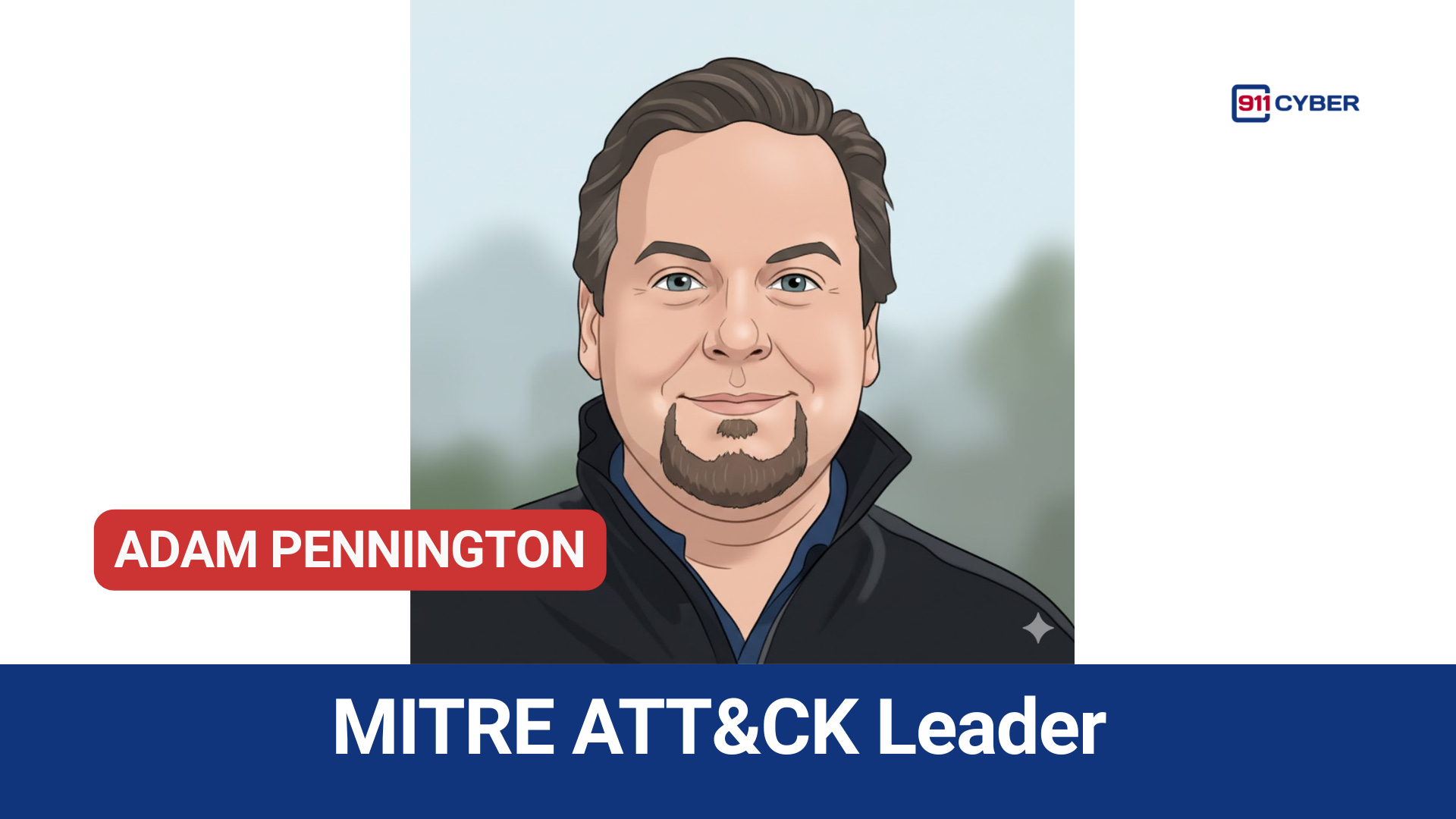
Adam Pennington is widely recognized as a long-time lead of the ATT&CK program and a public advocate for threat-informed defense. His role has included guiding the framework’s direction, supporting community engagement, and reinforcing the idea that defenders should prioritize blind spots and observable behavior, not just tooling outputs.
Subscribe and Comment.
Copyright © 2026 911Cyber. All Rights Reserved.
Follow 911Cyber on: