

🧠 Humans of Cyber | Christian Martorella
Open source OSINT tool that gathers emails, subdomains, and infrastructure data from public sources to map an organization’s external attack surface.

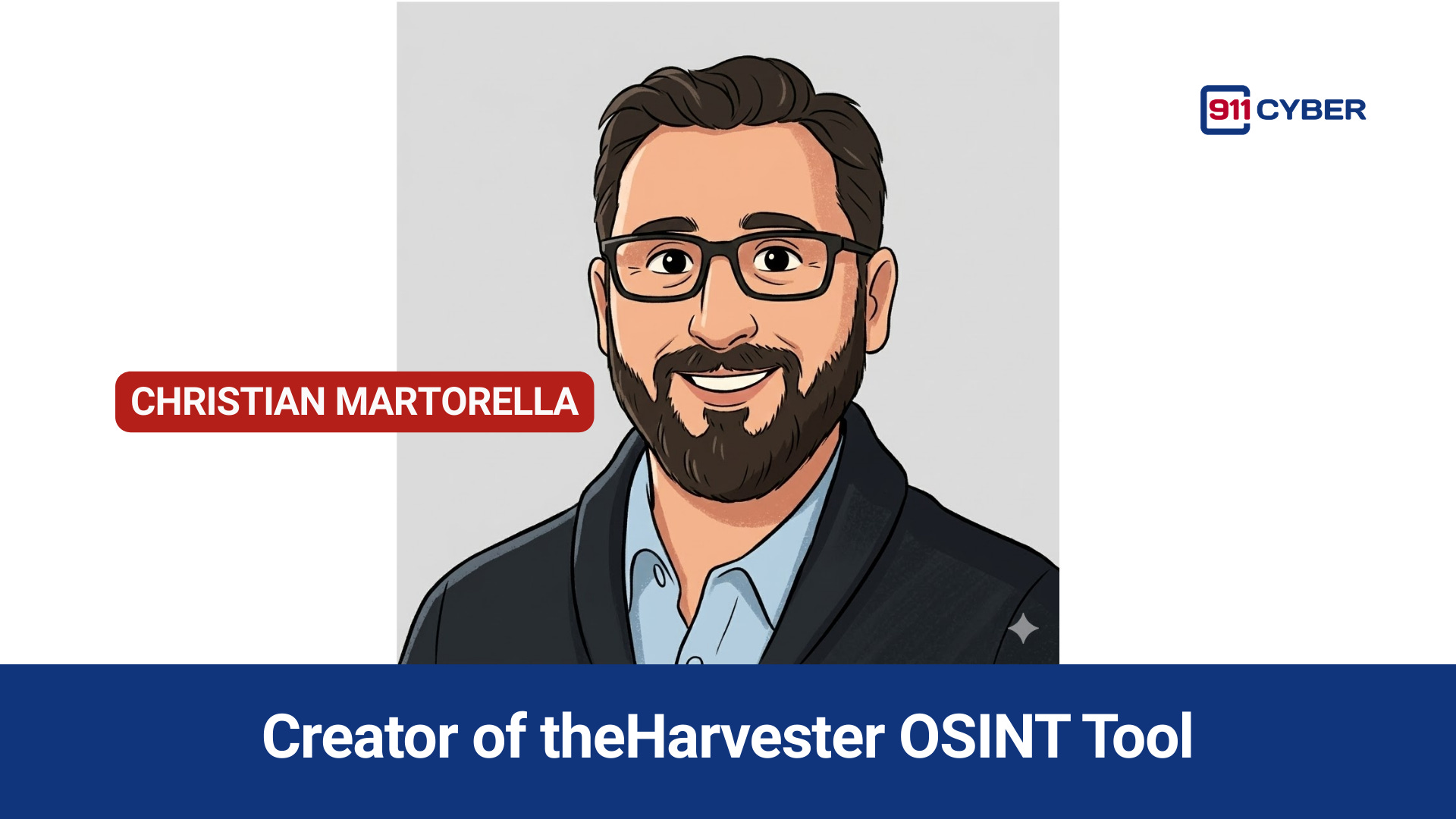
Before any penetration test or threat investigation begins, security teams usually start with a basic question. What information about an organization is already visible on the public internet? One tool that helped automate this discovery process is theHarvester, created by security researcher Christian Martorella.
Martorella first released theHarvester around 2007 while working on security research under the Edge-Security initiative. At the time, penetration testers often relied on manual searches to identify publicly exposed information about target organizations. The goal of theHarvester was to automate the collection of open source intelligence so security professionals could quickly map an organization’s publicly visible footprint.
Technically, the tool gathers data by querying multiple public sources across the internet. These include search engines, certificate transparency logs, public APIs, and other open data repositories. TheHarvester extracts artifacts such as email addresses, employee names, hostnames, and subdomains that are associated with a target domain. By aggregating these findings from different sources, it helps analysts build an initial profile of an organization’s external presence.
Earlier versions of theHarvester focused mainly on passive intelligence gathering. Modern versions have expanded their capabilities to include additional reconnaissance techniques. These can include DNS brute forcing, service enumeration, and automated screenshot capture of discovered subdomains, allowing investigators to gain a clearer picture of exposed web infrastructure.
The project continues to evolve through community development and is now primarily maintained in the laramies/theHarvester GitHub repository. It remains widely used in penetration testing, bug bounty research, and threat intelligence workflows where understanding an organization’s exposed digital surface is a critical first step.
Because of its accessibility and practical use cases, theHarvester is also included in widely used security distributions such as Kali Linux, making it a familiar tool for both experienced professionals and newcomers learning reconnaissance techniques.
Open source intelligence continues to play an important role in modern cybersecurity. Even before a vulnerability is tested, publicly available information can reveal valuable insights about infrastructure, technologies, and potential attack surface.
Subscribe and Comment.
Copyright © 2026 911Cyber. All Rights Reserved.
Follow 911Cyber on: