

🧠 Humans of Cyber | Johan Berggren
Open source DFIR timeline analysis platform that helps investigators correlate timestamped forensic data to reconstruct attacker activity during incidents.

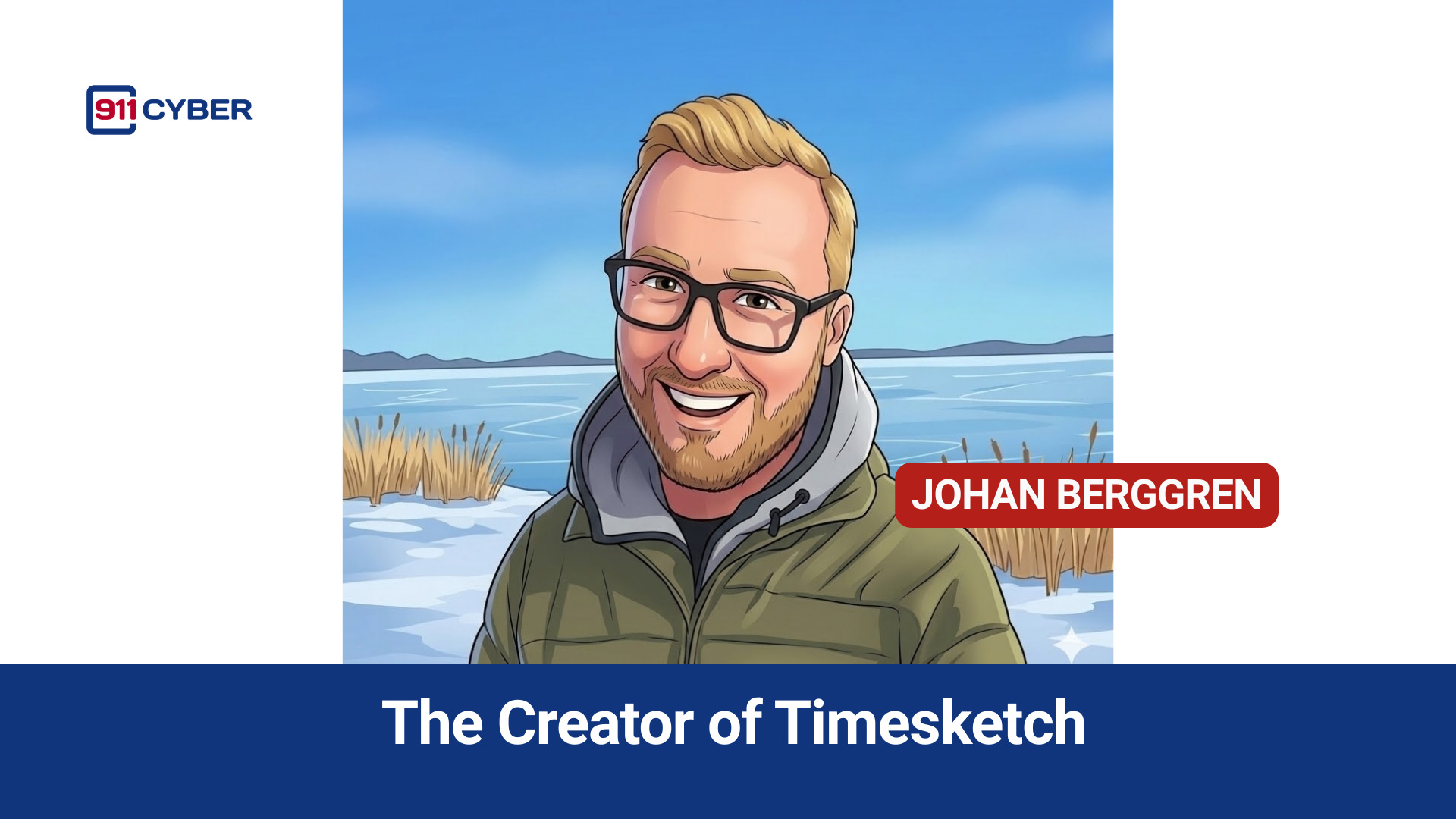
Digital investigations often depend on one critical capability. Understanding what happened first, what happened next, and how events connect across a compromised system. Johan Berggren, a security engineer at Google, created Timesketch to help investigators answer exactly those questions through collaborative timeline analysis.
The project emerged in the mid-2010s as incident response teams increasingly faced large volumes of forensic data. During investigations, analysts frequently collect artifacts from disk images, operating system logs, endpoint telemetry, and memory captures. Each artifact contains timestamps, but correlating those events across multiple sources can quickly become overwhelming. Berggren designed Timesketch to provide a structured way to explore these events as a unified timeline.
Technically, the platform ingests time-based forensic data and indexes it for rapid analysis. Investigators typically extract artifacts using forensic tools such as Plaso, which parses timestamps from file systems, application logs, browser histories, and other digital evidence. These records are then imported into Timesketch, where they become searchable events that analysts can filter, tag, and investigate.
The system is built as a web-based collaborative environment. Analysts can run queries across large event datasets, apply filters to isolate suspicious activity, and annotate findings directly within the timeline. This collaborative model allows multiple investigators to review the same dataset while sharing insights during an active investigation.
Timesketch is now used by digital forensics teams, incident responders, and security researchers who need to reconstruct attack timelines during breach investigations. It has become part of many DFIR workflows, particularly when dealing with large volumes of log data and forensic artifacts collected from compromised systems.
The project is open source and continues to evolve with contributions from the broader DFIR community. Its development reflects a growing need in cybersecurity. Not just collecting evidence, but turning large volumes of timestamped data into a coherent narrative of attacker activity.
Subscribe and Comment.
Copyright © 2026 911Cyber. All Rights Reserved.
Follow 911Cyber on: