

🧠 Humans of Cyber | Maxime Beauchemin
Open source workflow orchestration platform that schedules and monitors data pipelines using Python-based DAGs for reliable automation and dependency management.

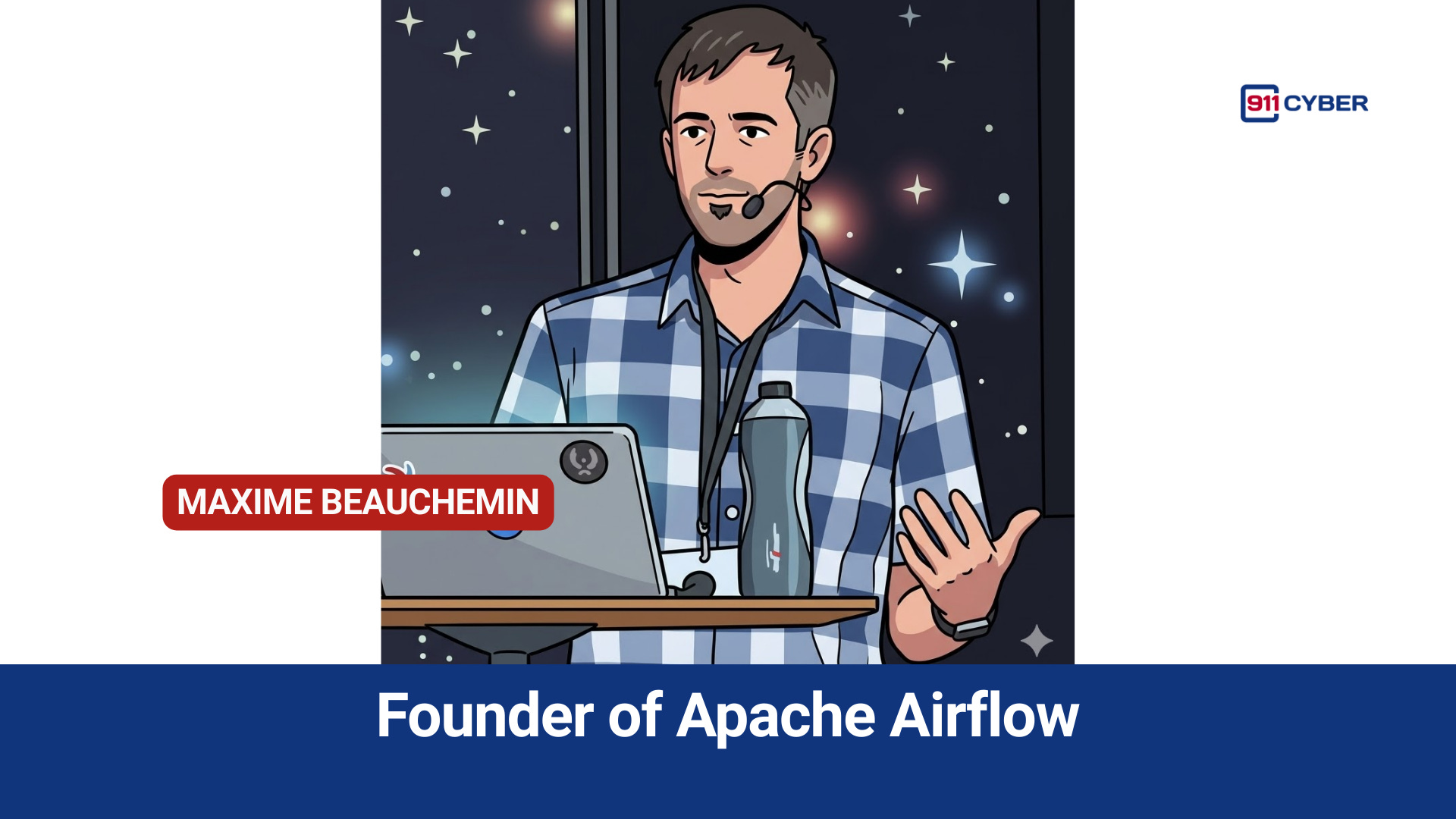
Apache Airflow is an open source workflow orchestration platform created in 2014 by Maxime Beauchemin at Airbnb. It was designed to programmatically author, schedule, and monitor complex data pipelines using configuration-as-code.
Airflow’s defining shift was that the configuration is executable Python. Workflows are defined as Directed Acyclic Graphs, or DAGs, written in code. This allows engineers to dynamically generate tasks, use loops and conditionals, and model complex dependencies in ways static XML or GUI schedulers cannot easily support.
At its core, the workflow includes a scheduler that evaluates DAGs and manages task state, workers that execute tasks, and a metadata database that stores orchestration history.
With the release of Airflow 3.0 in April 2025, the architecture was modernized. A dedicated API Server built on FastAPI now serves as the central communication layer, and the user interface was fully rewritten in React. This improves separation between orchestration logic and presentation.
It supports multiple execution backends, including LocalExecutor, CeleryExecutor, KubernetesExecutor, and the EdgeExecutor for remote or hybrid environments.
The project was open sourced in 2015, entered the Apache Incubator in 2016, and graduated as an Apache Top-Level Project in 2019. It is licensed under the Apache License 2.0 and governed by an Apache Project Management Committee.
Airflow is widely used in data engineering, analytics orchestration, and machine learning pipelines where reliability, retry semantics, and visibility into dependencies are critical.
Subscribe and Comment.
Copyright © 2026 911Cyber. All Rights Reserved.
Follow 911Cyber on: