

🧠 Humans of Cyber | Solomon Hykes
Docker standardized containerization in 2013, transforming software delivery, DevOps automation, and infrastructure security worldwide.

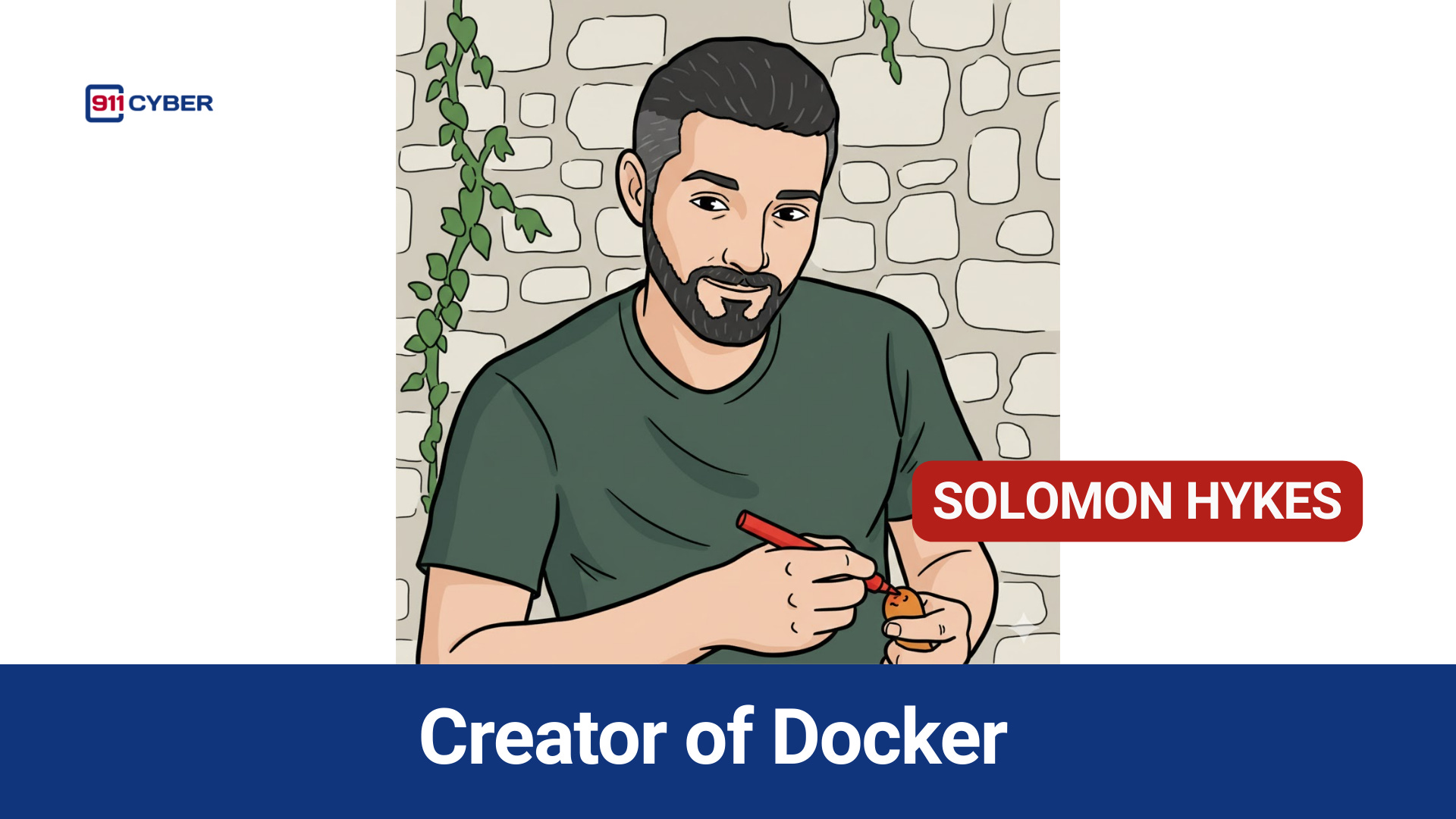
Docker was released in 2013 at a time when deployment inconsistency was a structural engineering problem. Applications behaved differently across development, staging, and production environments because dependencies, libraries, and system configurations drifted.
Docker did not invent Linux containers. It standardized their use. By packaging an application and its dependencies into a portable image, Docker established a reproducible execution unit that behaved consistently across environments. That shift redefined software delivery.
By 2026, Docker is no longer only associated with web servers or CI pipelines. It is increasingly positioned as an execution boundary for AI agents and autonomous workloads.
What Docker Standardized
Before Docker, teams relied on virtual machines or configuration management tools to approximate consistency. Virtual machines introduced overhead. Provisioning scripts introduced fragility.
Docker introduced the container image as a first-class artifact.
A container image encapsulates:
Application code
Runtime
System libraries
Dependencies
Configuration
This artifact can run anywhere a compatible container runtime exists. That portability became the foundation of cloud-native infrastructure.
How Docker Works
Docker leverages Linux kernel isolation mechanisms rather than hardware virtualization.
The modern Docker stack consists of:
Docker CLI – the developer interface
dockerd – the daemon managing images, volumes, and networks
containerd – lifecycle management
runc – the OCI-compliant runtime interfacing with the kernel
This modular architecture aligns with the Open Container Initiative standards, ensuring interoperability beyond Docker itself.
The Isolation Model
Docker abstracts three core kernel primitives.
Namespaces – Isolation Boundaries
Namespaces isolate system resources:
PID namespace isolates process trees
Network namespace provides separate IP stacks
Mount namespace restricts filesystem visibility
User namespace remaps root privileges
Processes inside a container operate within constrained views of the host system.
Cgroups – Resource Governance
Control groups regulate CPU, memory, and I/O consumption. They prevent a single container from exhausting host resources.
Layered Filesystems – Image Efficiency
Docker images are layered using filesystems such as OverlayFS. Each build instruction creates a read-only layer. Containers run with a thin writable layer on top.
This enables rapid startup, shared base layers, and efficient storage utilization.
From Tool to Infrastructure Standard
Docker’s release in 2013 accelerated adoption of containerization across the industry.
Key developments included:
2014: libcontainer replaced reliance on LXC
2014: Docker 1.0 marked production readiness
2015: Formation of the Open Container Initiative
2019: Mirantis acquired Docker’s enterprise division
Container images became the universal packaging format for Kubernetes, Amazon ECS, Azure Container Instances, and other orchestration platforms.
Docker shifted from product to standard.
Docker in 2026: AI and Sandboxed Execution
The most significant evolution is occurring in AI-driven infrastructure.
AI agents increasingly:
Execute code
Modify files
Access credentials
Communicate externally
These behaviors require strict execution boundaries.
Docker Sandboxes introduce stronger isolation for autonomous workloads. By combining container isolation with microVM-based separation, these sandboxes reduce risks such as:
Credential leakage
Host filesystem modification
Cross-process interference
Uncontrolled external communication
Containerization originally solved reproducibility. In 2026, it addresses AI containment and runtime trust.
Security Architecture
Containers share the host kernel. This architecture improves efficiency but demands layered controls.
Docker’s security model includes:
Capability Dropping
Containers run with minimal Linux capabilities by default, restricting privileged operations.
Seccomp Filtering
System call filtering limits interaction with sensitive kernel functions.
Mandatory Access Control
AppArmor and SELinux enforce policy-based access constraints.
User Namespace Remapping
Container root maps to a non-privileged host user, mitigating breakout risk.
Supply Chain Visibility
Docker Scout provides vulnerability scanning and image signature verification. Hardened base images reduce attack surface and limit exposure to unnecessary packages.
Security in containerized environments depends on layered isolation, not single boundaries.
CI/CD and Operational Impact
Docker permanently altered continuous integration and deployment models.
Ephemeral build agents eliminate dependency conflicts
Multi-stage builds reduce runtime image size and attack surface
Testcontainers integration enables production-representative local testing
Infrastructure consistency became engineered rather than assumed.
The Creator
Docker was created by Solomon Hykes, who co-founded dotCloud in 2008 and released Docker as an open-source project in 2013 after recognizing that its internal container tooling had broader industry value.
Hykes reframed containers as portable software artifacts rather than lightweight servers. That conceptual shift influenced DevOps culture and cloud-native architecture design.
He departed Docker in 2018 after scaling it into a globally adopted infrastructure platform. Docker, Inc. continues to maintain and expand the ecosystem, with increasing focus on developer tooling, supply chain integrity, and secure execution for AI-native workloads.
Docker’s architectural model remains foundational to modern software delivery and secure infrastructure design.
Subscribe and Comment.
Copyright © 2026 911Cyber. All Rights Reserved.
Follow 911Cyber on: