

Tis the Season… for Scammers Too
Black Friday brings great deals and bigger risks. Slow down, verify offers, avoid suspicious links, and stay alert to AI-driven scams this holiday season.

Welcome to Cyber Hygiene, my weekly newsletter, where I share tips and actionable data to help everyone stay safe online.
🎁 Why Black Friday Attracts Scammers
Every year, Black Friday kicks off the holiday shopping season in the U.S. It’s a day of steep discounts, heavy traffic, and frantic bargain hunting. For retailers, it’s a financial gold mine. For cybercriminals, it’s an open invitation. The urgency, hype, and impulse buying that fuel real sales also create ideal conditions for scams. Shoppers are impatient, less cautious, and more likely to click anything that promises “limited-time” or “door buster” savings. This makes Black Friday and the days around it some of the riskiest moments of the year for online fraud.
As the season begins, it’s more important than ever to recognize the threats hiding behind “too good to be true” deals.
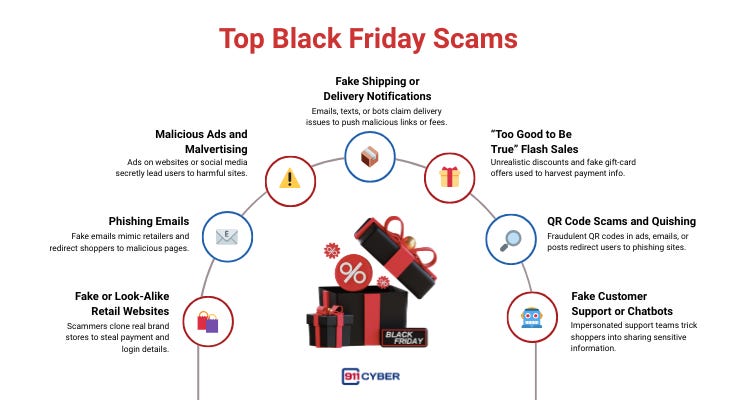
🛍️ Top Black Friday Scams to Watch Out For
🔒 Why You Should Care
Black Friday may seem like a chance to score unbeatable deals, but for cybercriminals, it is a peak season for attacks. Every click on a suspicious link, every rushed checkout, and every unverified offer creates an opening for fraud. Scammers rely on the urgency and excitement of holiday shopping to trick shoppers into giving away sensitive information.
Even small mistakes can have major consequences. A compromised email or payment account can lead to identity theft, unauthorized charges, or access to other accounts. The impact can extend beyond financial loss, affecting your personal and professional life.
Being aware of the risks is the first step toward staying safe. By taking a moment to verify deals, using secure payment methods, and avoiding impulse clicks, you can protect your data, your money, and your peace of mind during the busiest shopping season of the year.
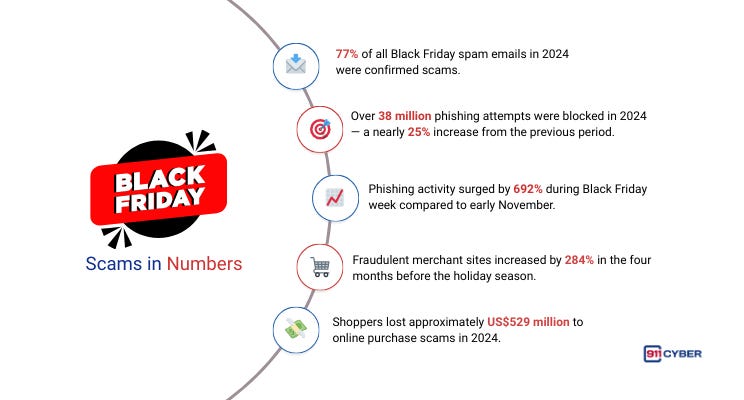
📊 Black Friday Scams in Numbers
🤖 How AI Is Making Things Worse This Year
The 2025 holiday season shows a worrying acceleration in scam sophistication, much of it driven by advances in AI and automation.
Fraudsters are using AI to generate convincing store clones. Realistic product photos, polished web design, and automated checkout flows make fake storefronts difficult to distinguish from real ones.
Deepfake and voice-cloning tools, once niche, are now widely accessible. Scammers using voice or video impersonations, such as fake spokespeople, customer support, or even friends and family in distress, make social engineering far more effective.
Automated mass-domain registration and bot-powered phishing campaigns, including look-alike domains, fake ads, and social-media storefronts, scale up quickly. Attackers can flood the web with hundreds or thousands of scam sites in just a few days.
AI does not just automate old tricks. It amplifies them, improves their believability, and drastically increases the scale of attacks.
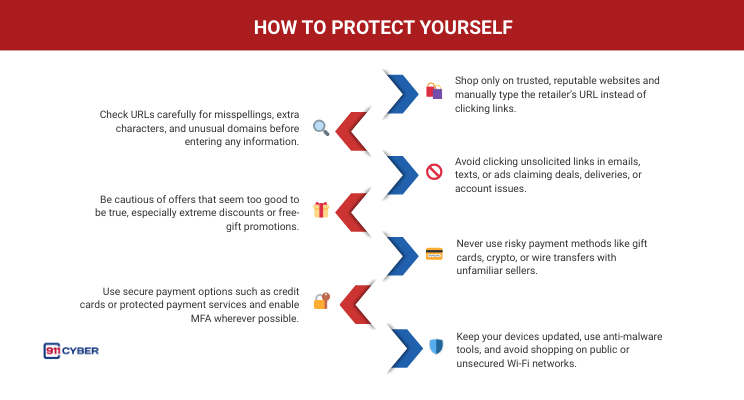
🛡️ How to Protect Yourself
❓ Other Questions People Are Asking
1. Can I get scammed even on well-known retailer websites?
Yes. Even legitimate websites can be compromised by hackers or display malicious ads. Always double-check that the website’s URL is correct, look for HTTPS, and avoid clicking on pop-ups or unexpected redirects during checkout.
2. How can I spot a fake product review or influencer promotion?
Fake reviews often sound generic, overly positive, or repeated across multiple products. Be wary of influencer posts or ads offering “exclusive” deals outside official retailer channels. Cross-check product listings on the retailer’s official site.
3. Is it safe to use gift cards, cryptocurrency, or wire transfers for holiday deals?
No. These payment methods are preferred by scammers because transactions are hard to reverse. Use secure payment options such as credit cards, PayPal, or digital wallets that offer buyer protection. One-time use or virtual cards can provide an additional layer of security.
4. What should I do if I think I’ve encountered a Black Friday scam?
Stop all communication with the suspicious site or person immediately. Do not provide any personal or payment information. Report the scam to the retailer, your bank or payment provider, and government or consumer protection agencies such as the FTC in the U.S.
5. How can I safely verify Black Friday deals on social media?
Check the official retailer’s social media accounts or website to confirm promotions. Avoid clicking on links from ads, direct messages, or influencer posts unless they redirect to a verified, official page. Use browser extensions or apps that warn about suspicious websites.
🧰 What Resources Are Available to Help?
📚Books
Secrets of Black Friday: How Shoppers Save Big, Sellers Earn More, and Everyone Stays Safe from Scams by Ruben Elliott
100 Facts About Black Friday & Cyber Monday with Tips on How to Avoid Scams by Robert Gres
How to Protect Yourself from Online Scams A Guide to Safe Shopping and Phishing Prevention by Atanas Atanasov
🎙️ Podcasts
Top Security Risks on Black Friday - What The Shoppers Need To Know with Mike Bolhius
Avoid Black Friday scams and shop safely online with Simon Miller
Is Black Friday a Scam by Cybernews Podcast
Your guide to a scam-free Black Friday by The Kim Komando Show
▶️ Videos
Black Friday: How to avoid being scammed online by cybersecurity criminals with Lisa Barber
Black Friday Scams: Avoid ‘Black Fraud Day’ - Essential Tips to Stay Safe by Nexus of Ideas
✨ Final Thoughts
Black Friday and the holiday shopping season offer great deals but also give cybercriminals a once-a-year opportunity to strike on a large scale. The same urgency, excitement, and chaos that fuel holiday sales also create the perfect cover for scams. As shoppers chase the thrill of a bargain, scammers do the same for stolen data and quick cash.
If there is one thing to remember this season, it is to pause first and click later. Treat every unsolicited deal, link, or “too-good-to-be-true” discount as a potential trap. A bit of skepticism and a few deliberate checks can go a long way in keeping your wallet, identity, and peace of mind intact.

Subscribe and Comment.
Copyright © 2025 @ 911Cyber All Rights Reserved.
This article was written by Marc Raphael with the support of:
Team CyberMaterial and Team 911Cyber
Follow 911Cyber on: